


IMPACT INDIA
The Collaborative Mind-set for Scaling Social Change
Two approaches for nonprofits that want to work effectively with the government in India.

Two approaches for nonprofits that want to work effectively with the government in India.

Viewing social and economic development as a series of interpersonal interactions can help us understand why development outcomes sometimes diverge from policy goals, and how gendered interactions shape social and economic development.


In the face of Berlin’s rising rents and gentrification, tenants are asserting their rights through Kotti & Co.

Canada’s Private Sponsorship of Refugees program offers an effective model for how to engage entire communities in welcoming newcomers.
With a US federal government divided and unable to address key social problems, state and local government leaders have a critical role to play in fostering local social innovation.
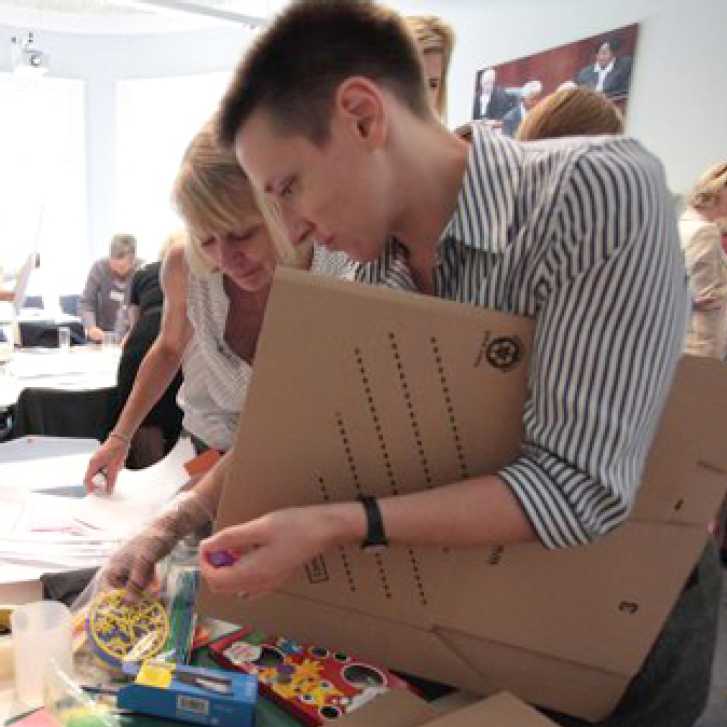
How policy labs can foster greater collaboration and policy co-creation.

Many small-scale (but scalable) creative efforts to foster tangible urban change, inspired by the burgeoning “tactical urbanism” movement, have met with success—and yet the movement itself faces limitations. How might this approach continue to evolve so as to effect inclusive, sustainable, and meaningful social and political change at the local level?

Stanford's Lucy Bernholz, Paul Brest, Woody Powell, and Rob Reich, along with Leif Wenar of King's College London, discuss their new volume of essays.